
PhD School lecturers
 Kenan Zhang (EPFL)
Title: The Markovian Framework of Traffic Assignment Problems and Its Applications in Emerging Mobility Systems
Traffic assignment models describe how selfish agents interact on a physical network under prescribed behavioral rules. Although originally developed for long-term travel demand forecasting, their applications extend far beyond road traffic. Among existing models, Markovian traffic assignment (MTA) strikes a balance between model representational power and analytical tractability by assuming memoryless system dynamics and state-dependent decision making. In this lecture, I will introduce MTA and its new advances, along with their applications in modeling emerging mobility systems that can hardly be characterized by classic traffic assignment models.
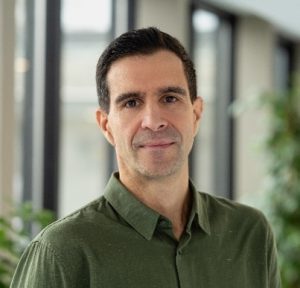 Carlos Lima Azevedo (DTU)
Title: Sensing and Modelling of Travel Behaviour and Emotions
Emotions are an outcome of experiences, including travel, and they play a crucial role in decision-making, extending beyond classical rational choice theory. However, integrating emotions in our travel behavior models is challenging due to their latent nature and the complexity in assessing their causes and impacts on decision-making. In this lecture, I will discuss our recent efforts in sensing, classical modelling and machine learning to illuminate these connections within the urban mobility context.
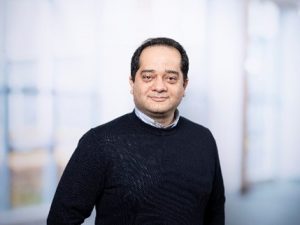 Yousef Maknoon (TU Delft)
Title: Real-Time Decision-Making in Last-Mile Service Systems
This course discusses methodological and computational challenges in real-time decision-making for dynamic and stochastic last-mile service systems. The focus is on online optimization and control in applications such as demand-responsive transport and urban delivery platforms, with particular attention to the interaction between customer behavior, operational decisions, and anticipatory fleet management. The course will be illustrated through application-driven case studies on dynamic dial-a-ride systems and meal delivery operations.
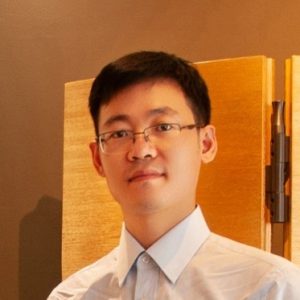 Zhenliang Ma (KTH Sweden)
Title: Large Language Models for Urban Transportation: Basics, Methods, and Applications
This lecture will introduce the emerging role of large language models (LLMs) in urban transportation research and practice. It will first provide a concise overview of the basic concepts of LLMs and foundation models, including prompting, retrieval-augmented generation, fine-tuning, reasoning models, and LLM-based agents. The lecture will then discuss how these methods can be applied to transportation problems through recent case studies, including travel behavior modeling, individual mobility prediction, pedestrian crossing-intention prediction, traffic signal control, and agentic simulation of route-choice behavior. The lecture will conclude with a brief discussion of key opportunities and open challenges, including data quality, model reliability, domain grounding, evaluation, privacy, and responsible use in transport applications.
 RERITE team: Bahman Madadi & Silvia Varotto (Univ Eiffel)
This lecture is dedicated to reproducible research in transportation. Transportation research is difficult to reproduce, which hinders the scientific progress of the field. Fortunately, tools and best practices for reproducible research are maturing and are becoming available to the transportation community. The objectives of the lecture are (1) to introduce the fundamental concepts of reproducible research in transportation, (2) to guide the documentation of data and projects that foster open science, and (3) to encourage collaboration within the transportation community by practicing reproducible research.