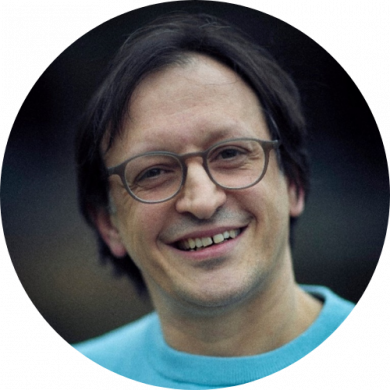
Francisco Camara Pereira
Title of his presentation: « The Unknowable Future: AI, Simulation Surrogates, and Deep Uncertainty »
Abstract:
What climate will a metro line opened today face in 2090? No scenario model can tell you — not because the science is bad, but because across a sixty-year horizon, the uncertainties compound past the point where any one path is meaningful. We build anyway. We have to. So the question shifts: short of prophecy, what do you actually anchor a fifty-year decision to? This talk explores how reinforcement learning and AI-based simulation surrogates can support decisions about the future of urban transport in the face of precisely this kind of uncertainty. Working within the MAAT project, we have developed a framework that combines climate projections, hydrological flood modeling, and transport network simulation to identify where and when adaptation measures should be deployed in flood-prone cities — without assuming we know which future will actually arrive. A central methodological challenge is computational: coupling RL with high-fidelity urban flood simulation at the scale needed for policy-relevant results is prohibitively expensive. We address this through APEX, a surrogate modelling approach that reduces simulation time from days to minutes while preserving the problem’s structure. We present results from Copenhagen and Esbjerg, and reflect on what they suggest about the possibility of planning well, not by predicting the future, but by learning to act wisely in spite of not knowing it.
Bio:
Francisco Camara Pereira is a Professor at DTU, where he leads the Intelligent Transport Systems group. His research focuses on the methodological combination of Machine Learning and Transport Research, addressing challenges such as climate adaptation, demand modeling, traffic prediction, data collection, simulation metamodeling, and anomaly detection.
He has been a Marie Curie fellow twice (2011 and 2016) and is currently a Novo Nordisk Data Science Distinguished Investigator. He has published over 80 articles in both Machine Learning and Transport Research. Before joining DTU, he was a Senior Research Scientist at SMART/MIT (2011-2015) and an Assistant Professor at the University of Coimbra (2005-2015).